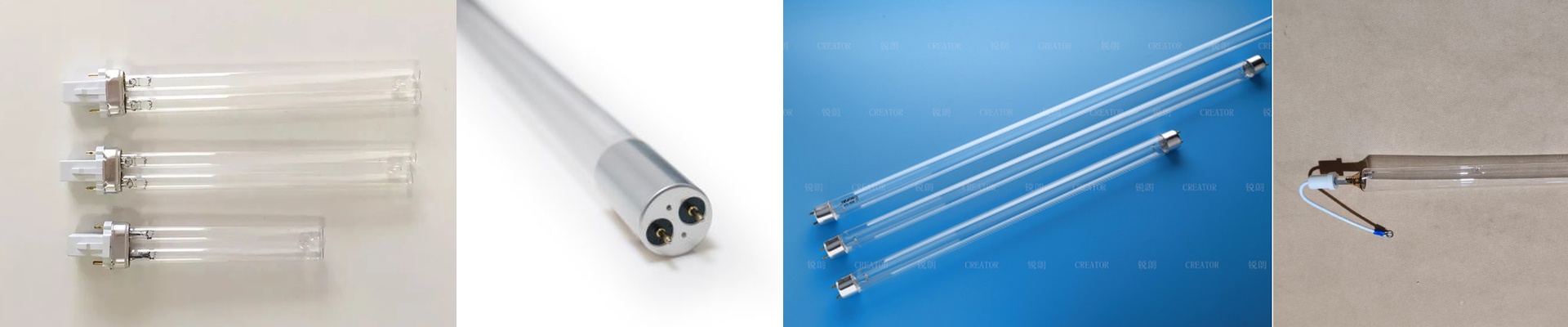
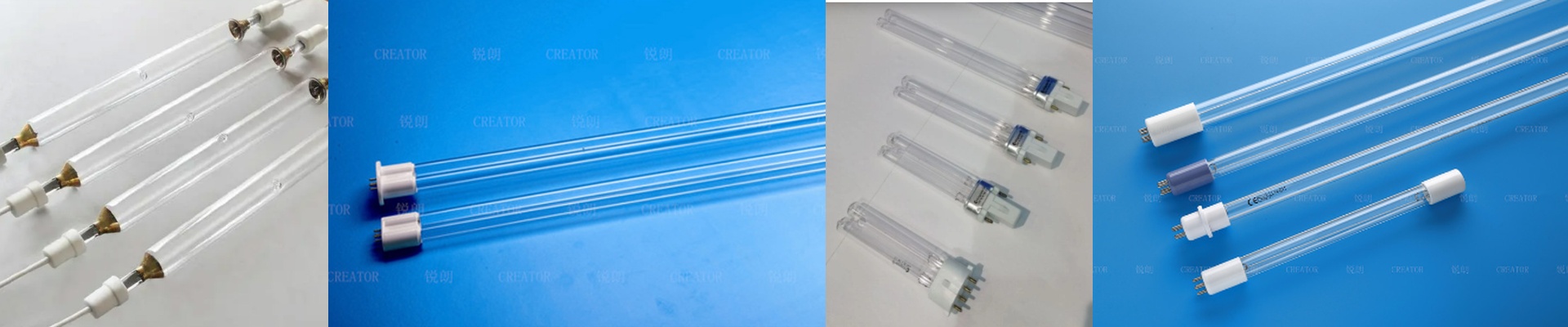
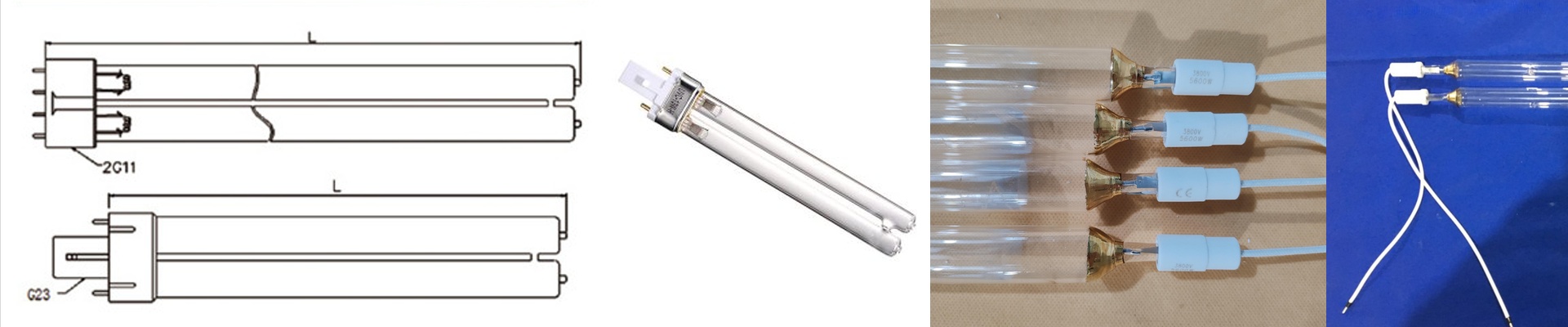
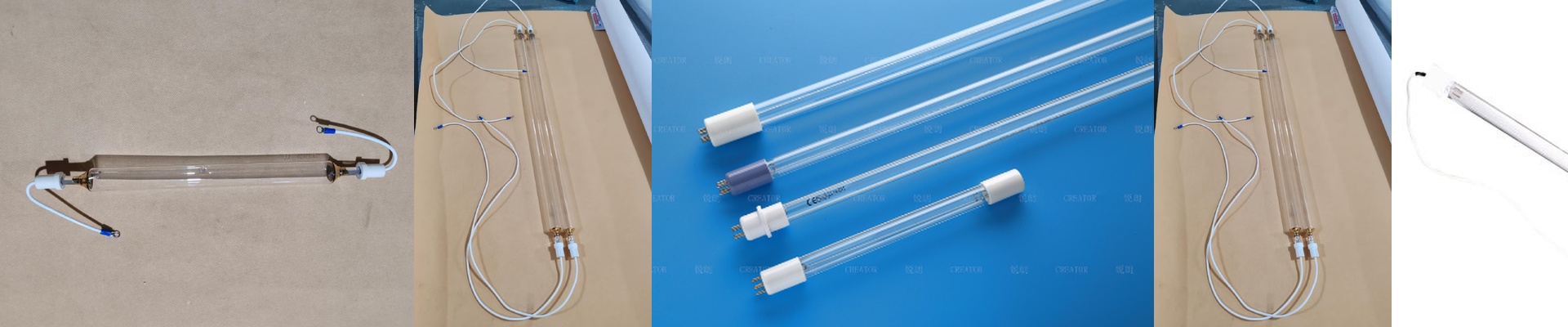
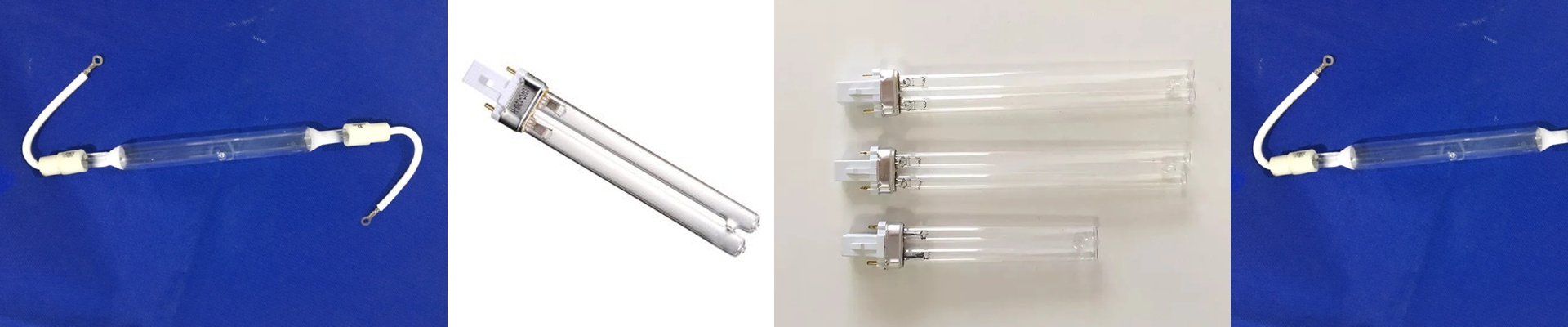

You run a water treatment line where flow never stops and pathogens don’t wait. One dip in disinfection performance and you’re staring down microbial breakthrough, rework, or a shutdown that pays for itself in downtime alone. Traditional chemical dosing drifts when chemistry shifts. Thermal methods struggle to keep pace with moving water and eat energy you can’t get back. In flowing water systems, you win at the point of exposure. That’s what a dedicated 254nm UVC sterilization lamp is built to deliver: predictable microbial inactivation in seconds—no chemicals, no bulk heat, and no added complexity to your process chain.
What matters, technically
A 254nm UVC sterilization lamp isn’t just “some ultraviolet source.” It’s a controlled photon engine built around the germicidal peak of low-pressure mercury vapor—centered at 253.7nm, called 254nm for shorthand in the field. That wavelength gets absorbed hard by microbial DNA and RNA, forming pyrimidine dimers that stop replication. No replication, no viable colony. The specs that decide whether it can deliver that lethal dose in real water conditions are straightforward:
- Peak irradiance at the target plane: Measured in mW/cm², this is how many photons hit per unit area per second. In flowing water, you don’t get to rely on long dwell. You need high photon flux to hit the required UV dose (fluence) in a short window.
- UV dose (fluence) in mJ/cm²: Dose is irradiance × exposure time. For bacteria like E. coli, inactivation thresholds often land in the tens of mJ/cm² depending on strain and water quality. For tougher organisms and messier water matrices, the required dose climbs fast.
- Lamp output stability over time: Output decays from electrode wear, mercury depletion, and quartz sleeve fouling. Stability is really the rate of output drop—percent loss per hour of operation. A stable curve means predictable performance between maintenance cycles.
- Arc length and geometry: In flow-through reactors, the lamp geometry defines the exposure path. A compact arc keeps the target volume tightly irradiated, which matters when contact time is measured in seconds.
- Ozone-free operation: Standard low-pressure mercury lamps emit at 185nm, which generates ozone. In water applications, ozone can create secondary oxidation byproducts and make control harder. Ozone-free versions use fused quartz that blocks 185nm while transmitting 254nm.
- Lifetime and end-of-life behavior: UVC lamps are typically rated 8,000–9,000 hours, with end-of-life defined as the point where output falls below the required threshold. A controlled end-of-life curve is worth more than a nominal hour count. We design the 254nm sterilization lamp around these truths: maximize 254nm photon delivery, hold output steady, and make the system easy to monitor and maintain.
Why it works in flowing water
In a flowing water system, disinfection happens in seconds—sometimes less. The reactor is a tight zone where water passes the lamp at process velocity. If the lamp can’t deliver enough irradiance across the flow path, the dose collapses and inactivation fails. Here’s how the 254nm UVC lamp gets second-level inactivation in practice:
- Dose is engineered into the hydraulics: We match lamp power, arc length, and reactor sleeve geometry to the flow rate and cross-section so the required UV dose lands within the residence time. If your line runs higher flow, you scale by increasing irradiated volume and photon flux—not by guessing.
- DNA damage is fast and irreversible: At 254nm, the photon energy is high enough to damage nucleic acids efficiently. Once you cross the dose threshold, inactivation happens without adding chemicals that leave residuals or change pH and conductivity downstream.
- Performance is measurable and controllable: UV intensity sensors and dose calculations let you monitor in real time. You don’t have to wait on lab results to know the system is doing its job.
- Operating cost is predictable: UVC disinfection draws power only when the lamp is energized, with no chemical purchase, storage, or dosing equipment. Maintenance is simple: replace lamps on schedule and keep sleeves clean. When you put in a water-treatment-dedicated 254nm UVC system, you get a disinfection step that keeps pace with continuous flow. Pathogens are inactivated in seconds, and the process stays stable even when upstream conditions vary.
Performance: stability, lifetime, and total cost
In the field, you judge systems by what they deliver over months, not what they promise on day one.
- Output stability: A well-driven 254nm low-pressure lamp holds output within a narrow band over its life. We see units running 5,000+ hours with less than 5% output drop when operated within design current and temperature windows. That stability translates straight into dose consistency.
- Lifetime behavior: UVC lamp life is limited by electrode sputtering and mercury migration. A conservative electrode design and stable ballast control extend useful life and reduce end-of-life cliffs. Expect 8,000–9,000 hours in typical water disinfection duty, with predictable derating.
- Total cost of ownership: UVC disinfection avoids chemical consumables and the cost of handling, storing, and dosing oxidants. Energy draw is modest compared to thermal methods, and the footprint is small. Replacement is lamp-only, scheduled during planned maintenance. Compared with chemical dosing, UVC removes variability tied to reagent quality and feedwater chemistry swings. Compared with thermal disinfection, it eliminates the energy penalty of heating large water volumes and the associated heat exchange hardware.
The things you need to know
UVC disinfection is solid, but it’s not set-and-forget. Real conditions matter.
- Water quality drives dose requirements: Turbidity, color, and suspended solids attenuate UV. If your water matrix changes seasonally, size the system for worst-case or add pre-filtration. Undersized systems will show breakthrough when clarity drops.
- Lamp temperature matters: Low-pressure mercury lamps perform best within a specific envelope. Too much cooling or overheating shifts output and shortens life. The reactor design has to manage temperature at process flow.
- Sleeve fouling reduces output: Deposits on the quartz sleeve act like a filter. In hard water or iron-rich streams, plan for periodic cleaning or automatic wipers. Output can fall fast if the sleeve isn’t maintained.
- UVC is hazardous to eyes and skin: Install interlocks and shielding. Never view an operating UVC source. Safety hardware is part of the system, not an accessory. If you’re running a continuous water treatment line, the question isn’t whether you can afford to add a 254nm UVC sterilization lamp. It’s whether you can afford a disinfection method that can’t keep up with the flow. Size it right, monitor it, and maintain it—then you get second-level bacterial inactivation, consistently and measurably, without chemical overhead.